Celebrating 150 years of the Library of Parliament building
For 150 years, the Library of Parliament building has stood as one of Canada’s most iconic landmarks. Opened in 1876, this architectural masterpiece is rich in history and craftsmanship and serves as a beacon of information and knowledge at the heart of Parliament.
As we mark its 150th anniversary, we celebrate more than a remarkable building that has endured fire, rebuilding and renewal. We also honour the generations of Library employees who have contributed to the institution over the years, expanding its services and expertise to meet the changing needs of parliamentarians.
Join us in celebrating this milestone anniversary by exploring the building’s rich history, remarkable architecture and enduring role at the centre of Canada’s parliamentary democracy.
The above video is also available in:
The Library of Parliament traces its roots to Upper and Lower Canada’s legislative libraries, created in 1791 and 1792, respectively. After the unification of Upper and Lower Canada and the creation of the new Province of Canada, the collections of their legislative libraries were merged in 1841, and in 1871, an Act established the Library of Parliament as the institution we know today.
In 1859, an architectural competition was launched for the design of the Library of Parliament building. Architects from Britain, continental Europe, the United States and Canada submitted design proposals that featured a Norman castle, a Greek temple and a Victorian mansion. The winners of the competition, Toronto architects Thomas Fuller and Chilion Jones, put forward a neo-gothic design which drew inspiration from the Reading Room in London’s British Museum and the Sainte-Geneviève library in Paris.
The first parliamentary librarian, Alpheus Todd, influenced the building’s design. In particular, he advocated for a circular shape that would allow most of the collection to be seen at once. The most insightful of Todd’s contributions was his requirement that the Library be constructed in a building separate from the main Centre Block and connected to it by a corridor fitted with heavy iron doors. This foresight proved to be pivotal to the Library’s survival.
The Library of Parliament building has withstood two fires.
On 3 February 1916, a fire broke out in the House of Commons Reading Room and spread quickly throughout the Centre Block building. Thanks to the quick actions of a House of Commons messenger and librarian, Michael Connolly MacCormac, the Library’s heavy iron doors were closed just in time, sparing the Library, while the rest of the Centre Block building was destroyed by flames. For more than four years, the Library stood alone as the new Centre Block was built.
Another fire broke out in 1952, this time within the Library building, in its soaring dome. While the fire was quickly extinguished, smoke and water caused heavy damage to both the building and the collection.
Significant restoration work was required following the fire of 1952. Thousands of hand-carved pieces, such as mouldings, carved doors, delicate rosettes, oak drawers and wall panels were labelled, dismantled and shipped to Montréal, where they were meticulously cleaned and refinished. At the same time, Library employees worked tirelessly to dry, stabilize and restore damaged items from the collection, thus preserving both the building and its invaluable resources for future generations.
Many of the Library’s original Victorian features have been altered with the passage of time, but a major restoration project launched in 2001 carefully returned these elements to their historic glory, preserving the building’s architectural integrity and original craftsmanship. During that project, the building was also expanded below ground to give the Library more space for its collection. The restoration was completed in 2006.
In 2019, the Library of Parliament building closed again due to the ongoing rehabilitation of Centre Block. The Library will remain closed until Centre Block reopens. Services to parliamentarians will continue during this time and be offered through five Library branches located across Parliament Hill.
The Library of Parliament building abounds in examples of incredible craftsmanship and detail. Carved Canadian white pine panels depict flowers, masks and mythical creatures. The intricate parquet floor, made of cherry, white oak and black walnut, and the white marble statue of Queen Victoria are among the signature interior highlights of the building. Architect Frederick John Alexander designed the interior fittings, including the wood mouldings, panels, cornices and carvings that give the Library its rich High Victorian Gothic Revival style.
One of the most striking features of the space is the Library’s book stacks, three tiers high. The stacks are arranged in eight sections that extend toward the centre of the circular room like the spokes of a wheel and run just below the high windows, creating a remarkable visual pattern. Each bay is adorned with carved pediments, raised foliage panels, patterned borders, hand-carved rosettes and detailed daisy and sunflower motifs, showcasing the exceptional skill of the craftspeople who brought Alexander’s designs to life.
While the building itself is iconic, the Library of Parliament is first and foremost a modern, non-partisan source of information and knowledge for parliamentarians.
Over the years, the role of the Library has evolved from housing a traditional reference collection to hosting a dynamic research institution. Today, in addition to its extensive resource collection, it offers impartial and confidential research, information and analysis services to parliamentarians and their staff. The Library also offers visitor services on behalf of Parliament and educational resources designed to help individuals of all ages learn about the role, history, art and architecture of Canada’s Parliament.
Although the historic building remains closed during the rehabilitation of Centre Block, Library services continue to be offered without interruption, ensuring that parliamentarians have access to trusted expertise, information and knowledge.
- It took ten months for the skilled carvers from Toronto to complete the pine interior of the Library of Parliament building.
- Architects Fuller and Jones were given high praise for using many materials found in the Ottawa area in their design of the Library of Parliament.
- Marshall Wood sculpted a statue of Queen Victoria in white marble. It was finished in 1871 and became so popular that sculpting similar statues became a trend at that time.
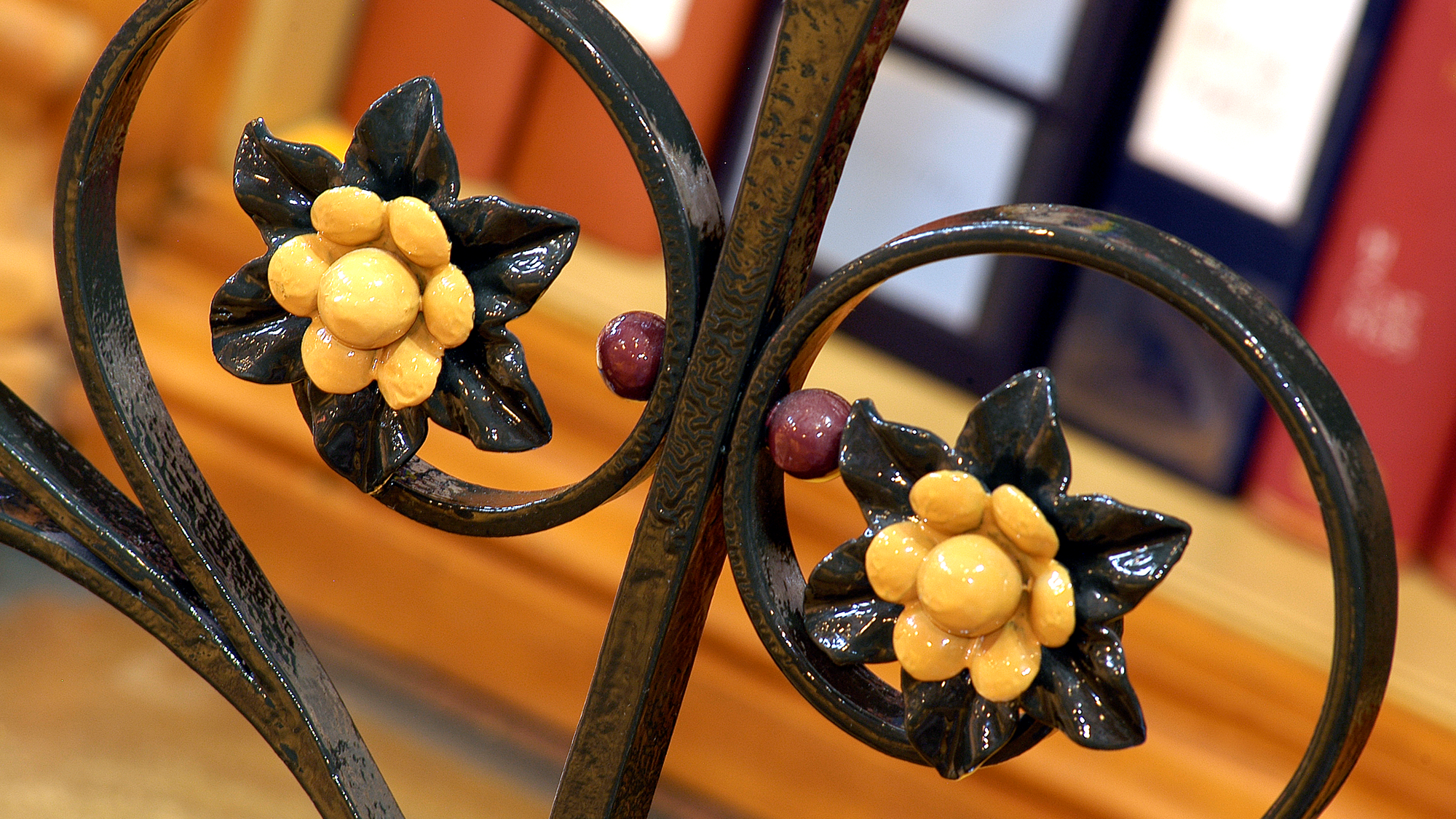
- The Canada Lock Company employed about 60 inmates at Kingston Penitentiary to create the wrought iron balustrades for the alcoves and three-tier book stacks.
- Architectural firm Thomas Fuller Construction Company, operated by the great-grandsons of one of the original architects of the building, worked on the rehabilitation that began in 2001.
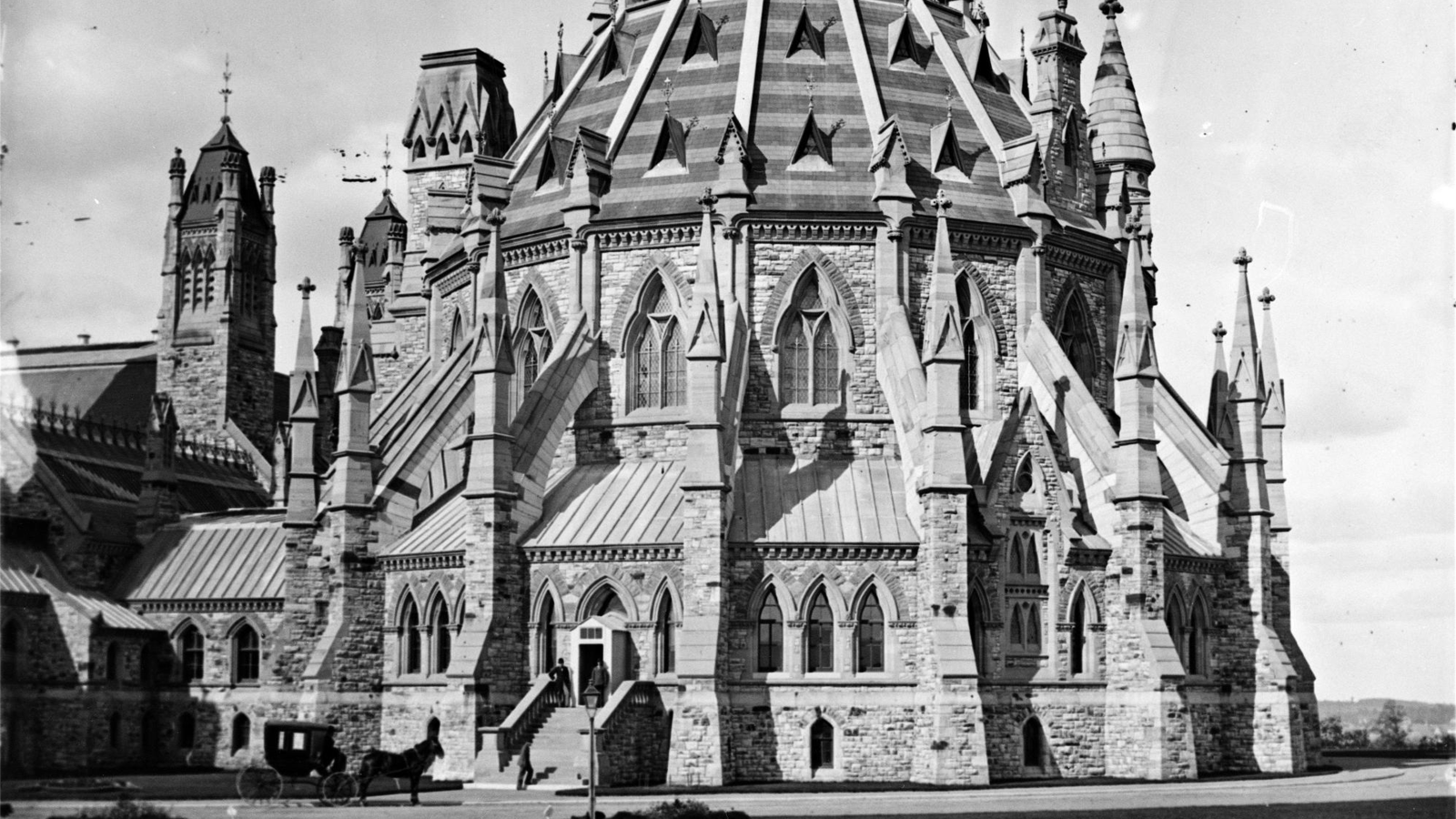
Black-and-white historical photograph of the Library of Parliament
showing its original roof.
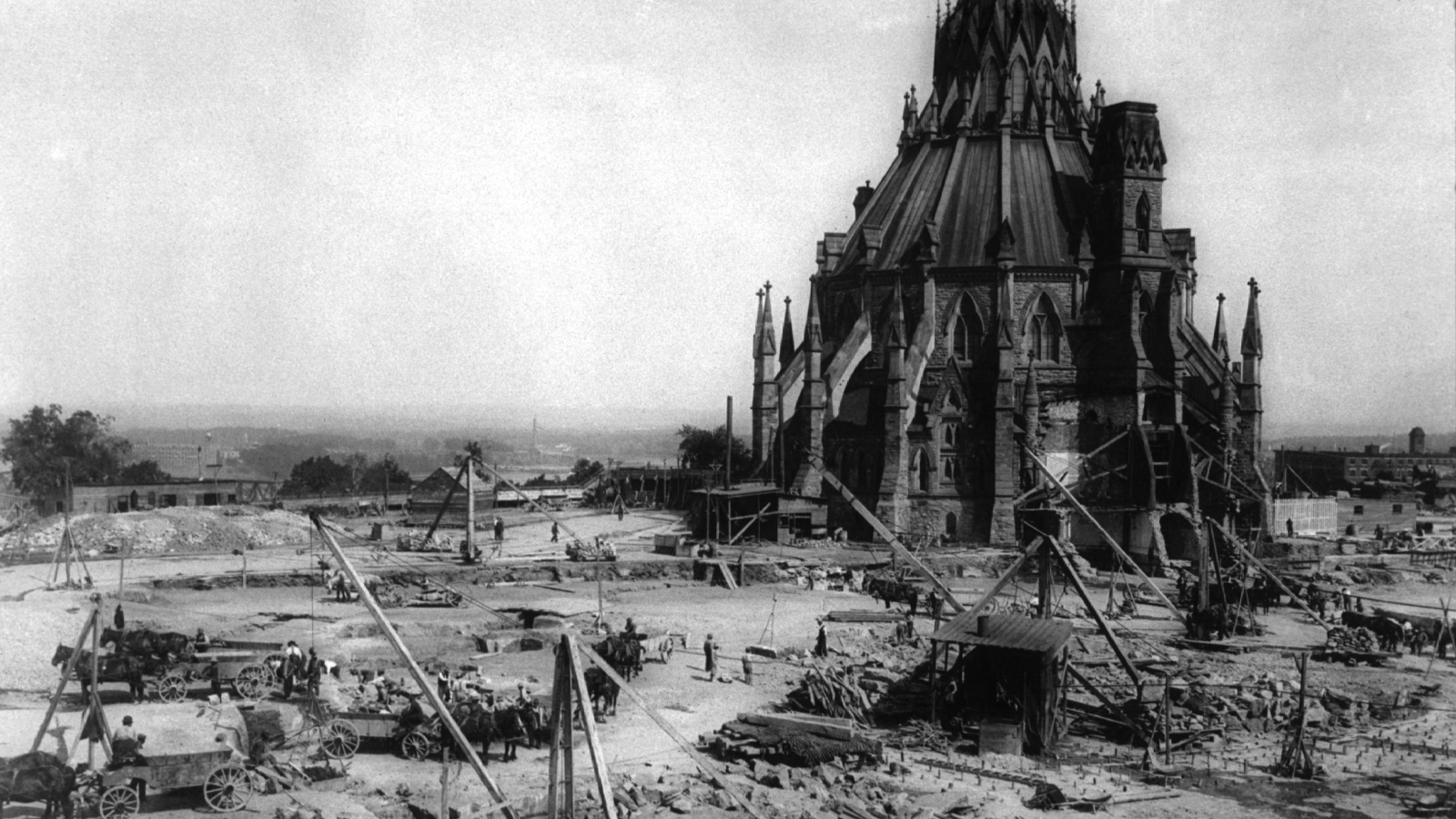
Black-and-white photograph dated August 15, 1916, showing the reconstruction of Centre Block
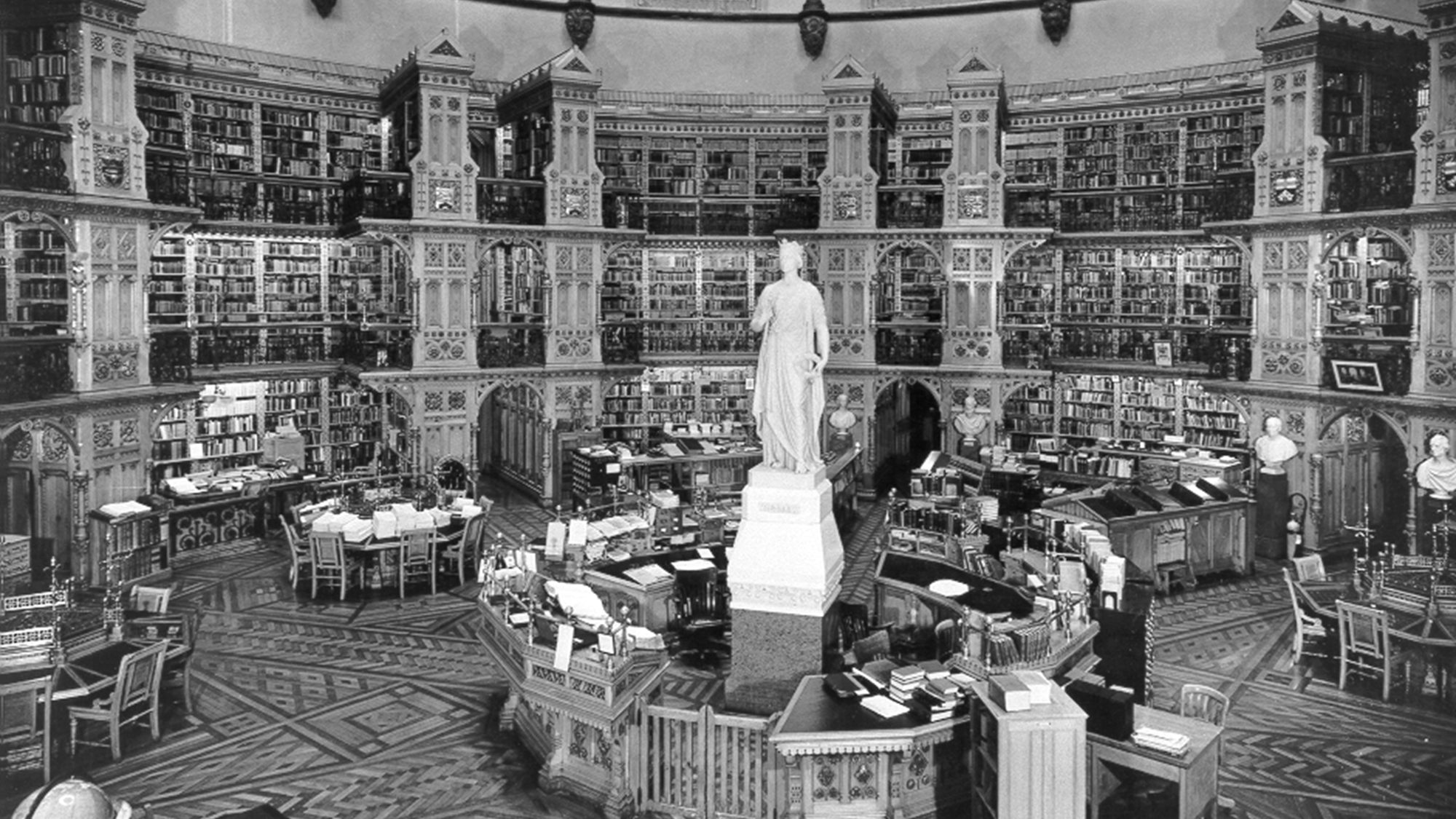
Black-and-white photograph from December 1945 showing the interior
of the Library of Parliament’s circular reading room.
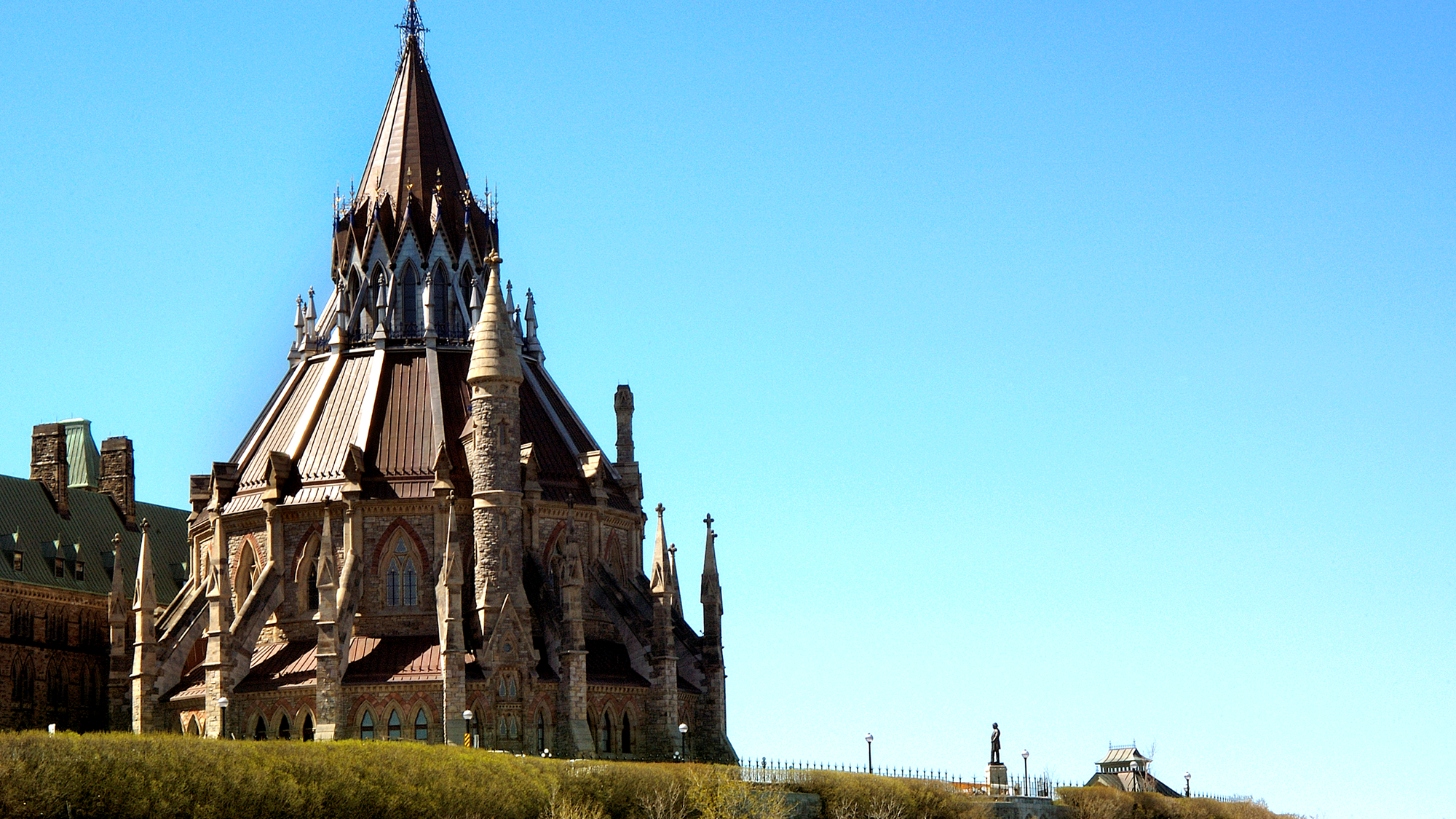
Exterior view of the Library of Parliament.
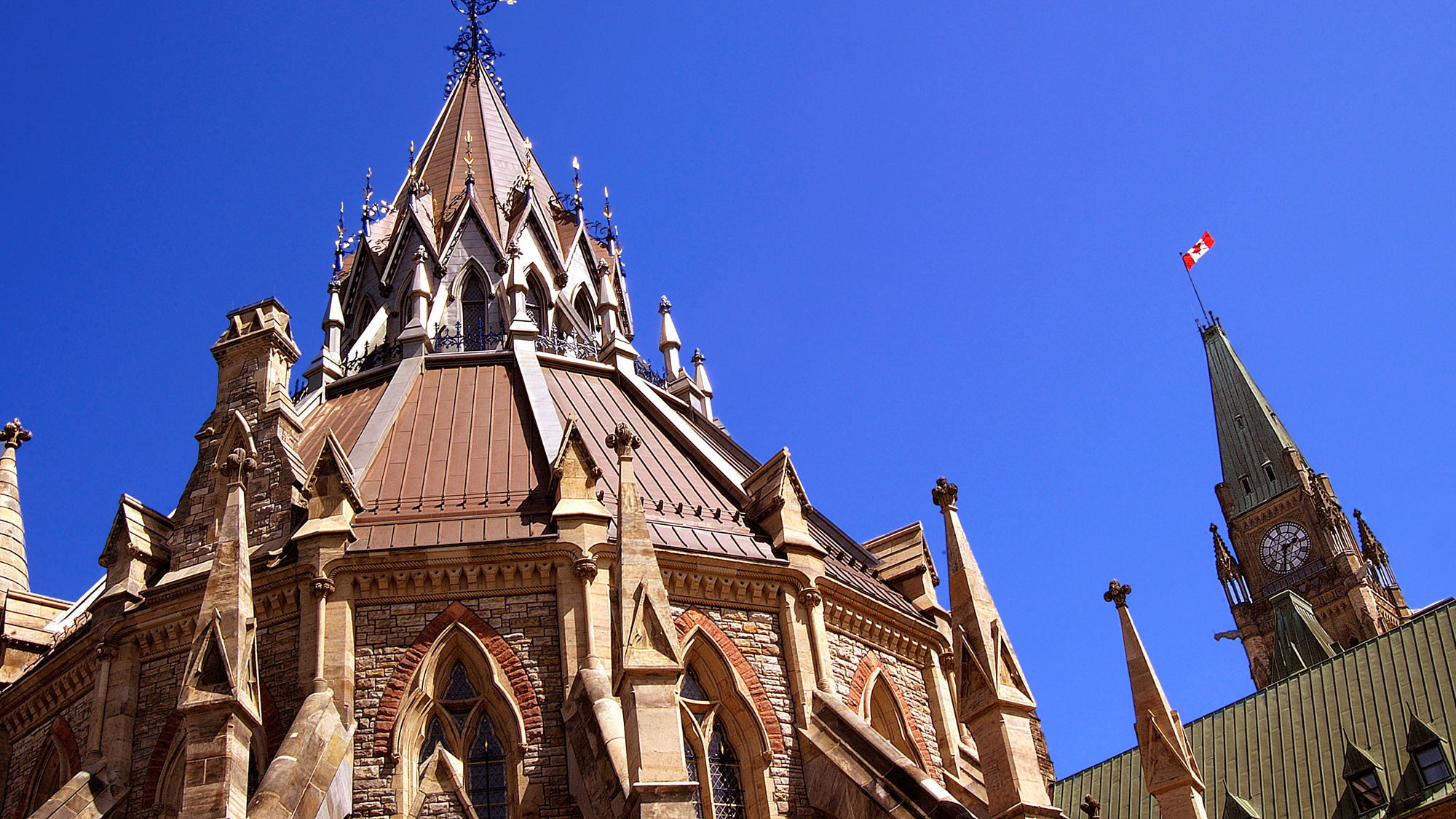
Exterior view of the Library of Parliament with the Peace Tower
visible in the background.
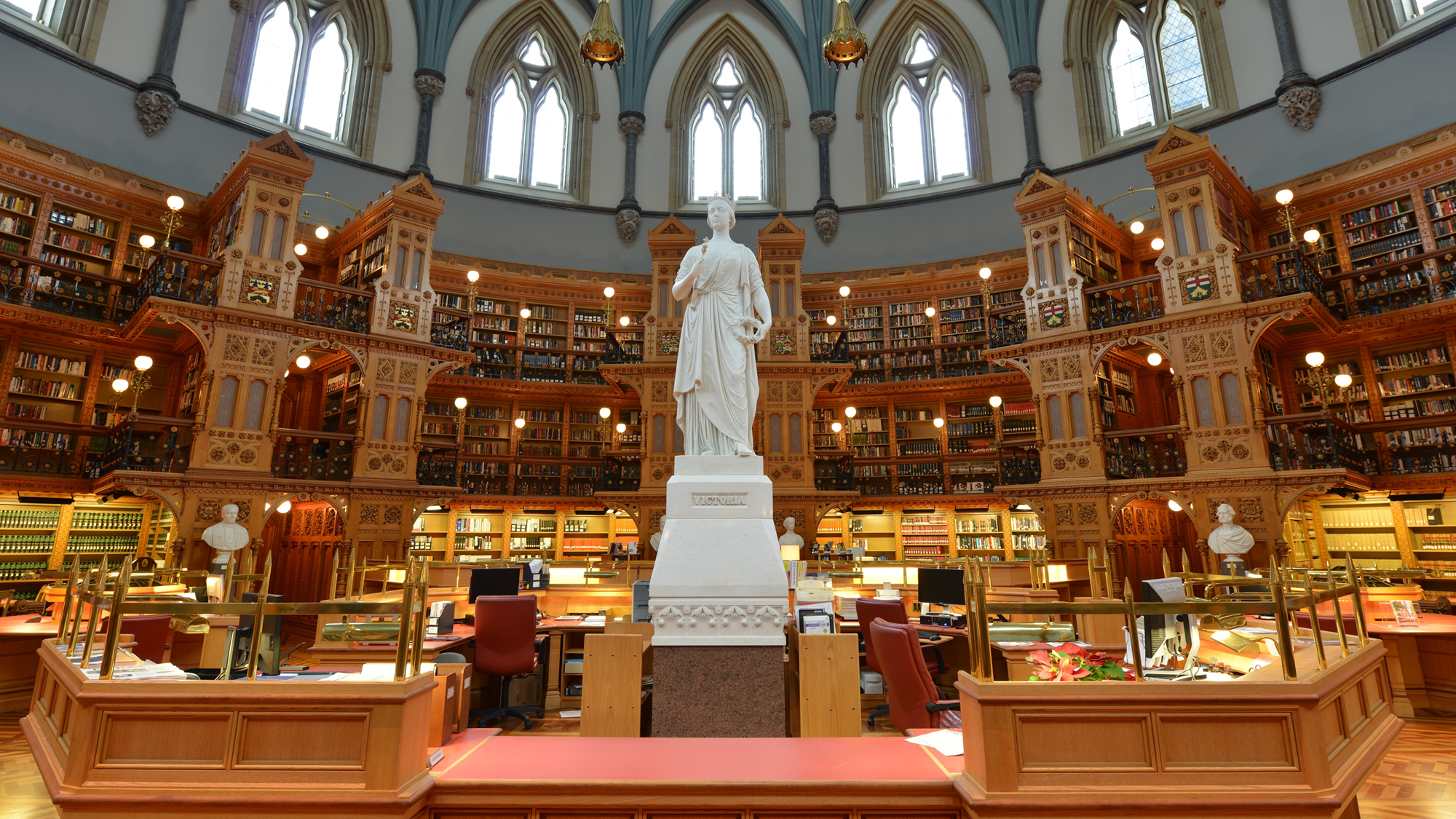
Interior view of the Library of Parliament reading room.
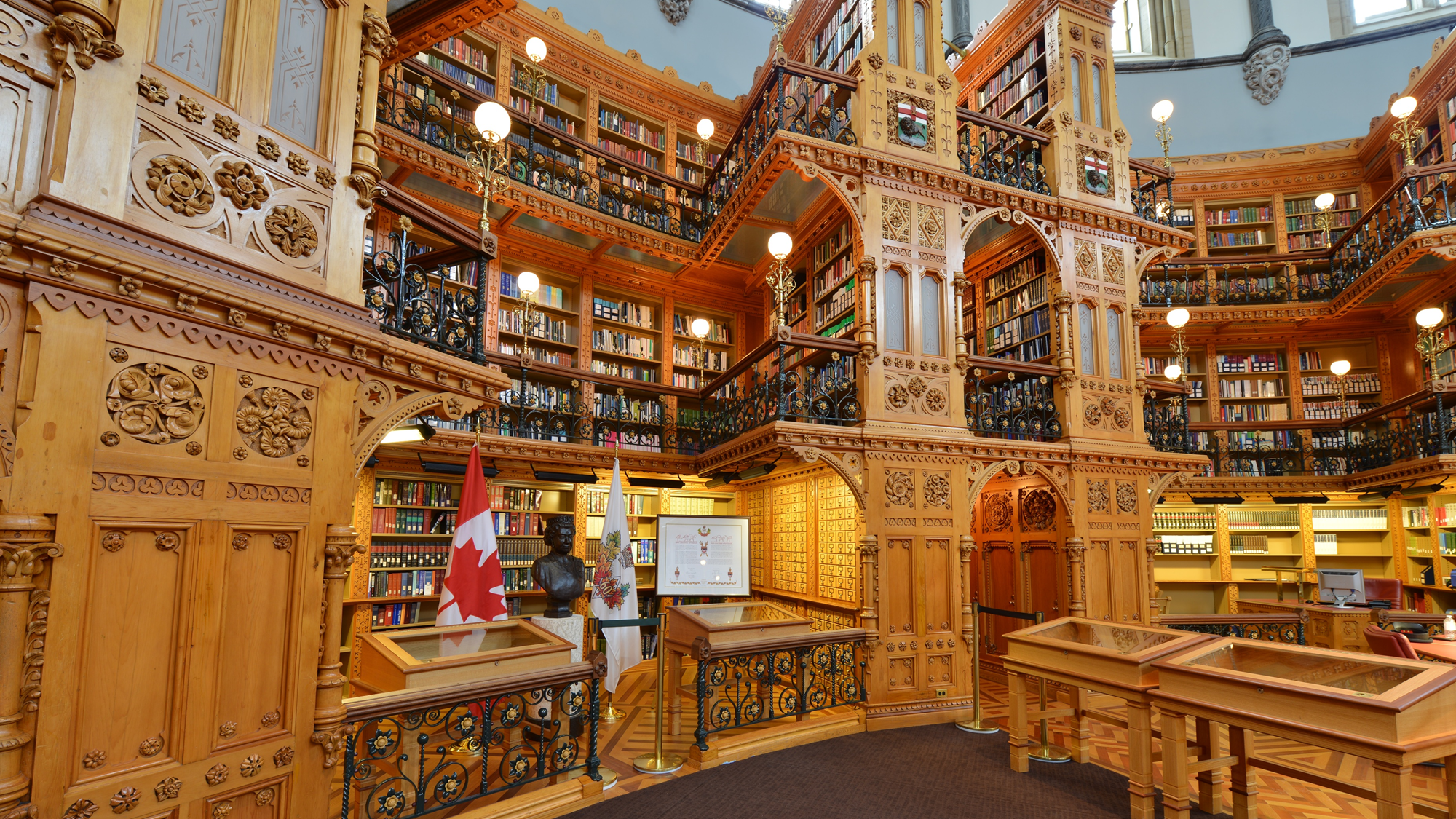
Interior view of the book stacks at the Library of Parliament.
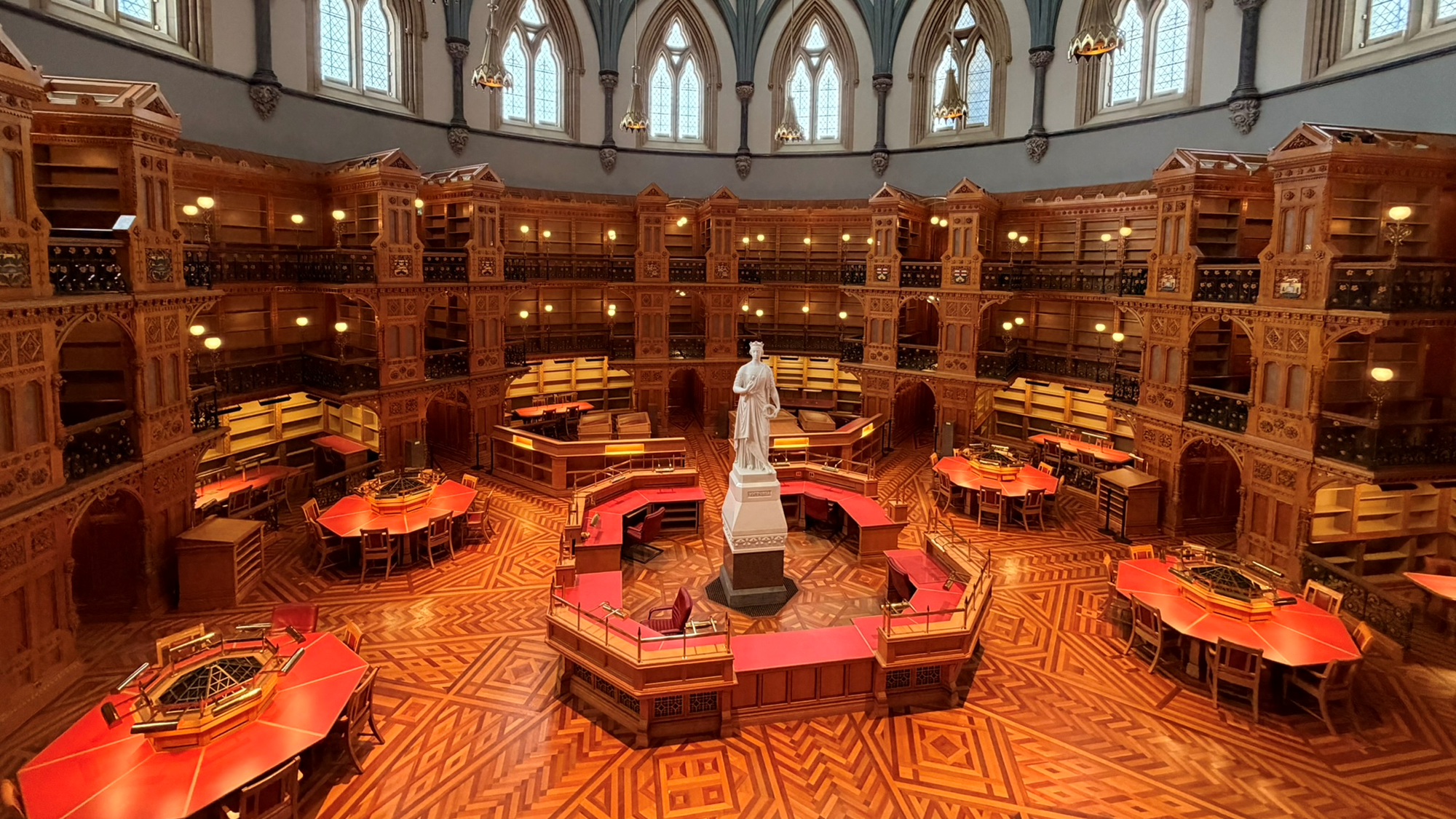
Interior view of the Library of Parliament reading room, emptied for the rehabilitation of Centre Block.
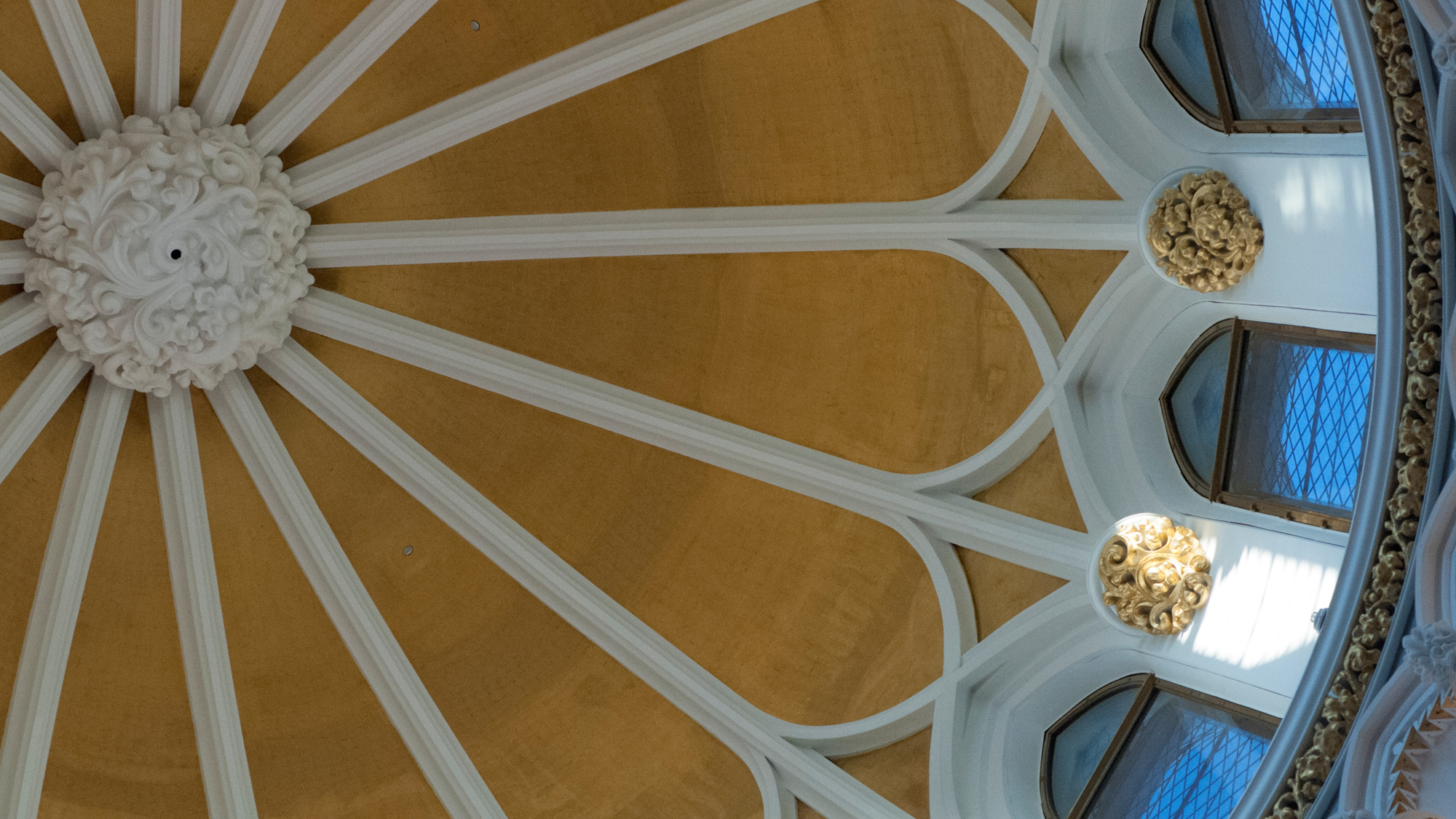
Interior view of the Library of Parliament dome.
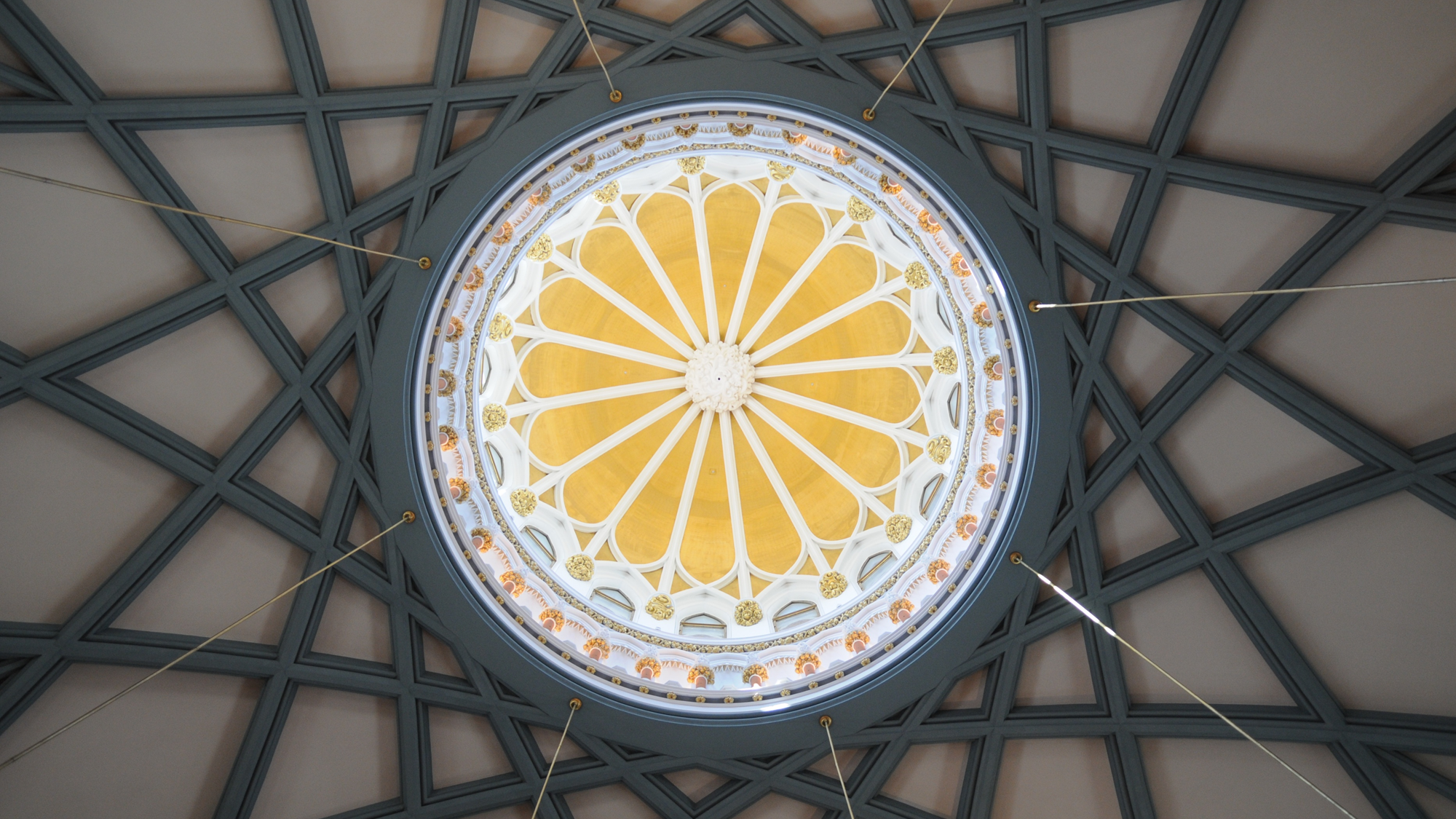
Interior view of the Library of Parliament dome.
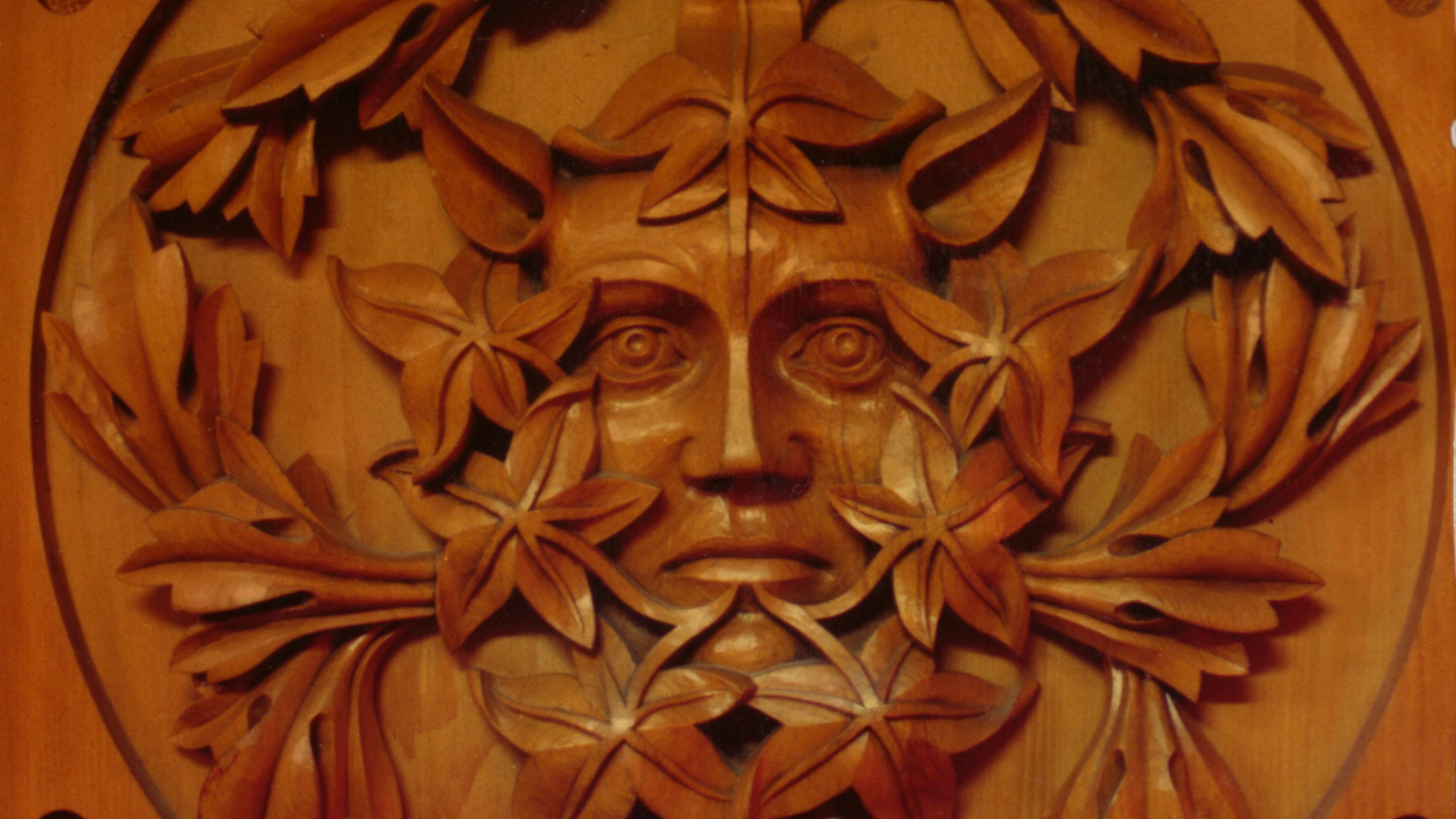
Wood carving inside the Library of Parliament.